Showing posts with label exploration. Show all posts

A Decade of Space Exploration (2015-2025): What Happened?

 The Decade of Space Exploration (2015-2025): What Happened?

The period from 2015 to 2025 marks a transformative era in space exploration, characterized by technological advancements, international collaboration, private sector involvement, and emerging ethical considerations. This decade has fundamentally reshaped how humanity approaches space, setting the stage for future explorations and challenges.

Explore Lexicon Labs Books

Discover current releases, posters, and learning resources at http://lexiconlabs.store.

Conversion Picks

For mobility and frontier-tech readers, continue with:

Technological Advancements

A major development of this decade is the advent of reusable rocket technology, led by SpaceX's Falcon 9, which has significantly lowered the cost of access to space (SpaceX, 2020). This innovation has facilitated increased commercial activities and scientific missions, such as NASA's Perseverance Rover, which has provided critical insights into Mars (NASA, 2021).

spacex, space colony, exploration

International Collaboration and Geopolitical Dynamics

International collaboration has flourished, with the International Space Station (ISS) continuing to serve as a hub for scientific research. The European Space Agency's ExoMars and NASA-ISRO lunar missions highlight global efforts in space exploration (European Space Agency, 2021). Meanwhile, China's advancements, including the Chang'e-4 lunar landing and the Tiangong space station, underscore its emergence as a major space power (Jones, 2022).

Private Sector and Socioeconomic Impacts

The private sector's role has expanded, with companies like Blue Origin and Virgin Galactic pioneering space tourism. The proliferation of small satellites has enhanced global communications and environmental monitoring, contributing to economic growth (Parker, 2020). However, these advancements raise concerns about space debris and environmental impacts.

Ethical Considerations and Policy Frameworks

The commercialization of space has introduced ethical dilemmas, such as resource exploitation and unequal access to space benefits. The rapid pace of space activities has prompted the development of regulatory frameworks to manage space debris and prevent weaponization, ensuring sustainable exploration (Johnson-Freese, 2021).

Challenges and Future Outlook

Despite significant achievements, the decade has seen challenges, including delays in the Artemis program and issues with Boeing's Starliner (Smith, 2021). As we look forward, addressing environmental and ethical concerns will be crucial to sustaining momentum in space exploration.


Conclusion

The decade from 2015 to 2025 has laid a robust foundation for future space endeavors. Through technological, collaborative, and regulatory advancements, humanity is poised for even more ambitious explorations, provided that ethical considerations and global cooperation remain at the forefront.

References

European Space Agency. (2021). ExoMars 2022. Retrieved from https://www.esa.int/Science_Exploration/Human_and_Robotic_Exploration/ExoMars

Jones, A. (2022). China's Ambitions in Space. Space Policy, 56, 101-110.

Johnson-Freese, J. (2021). Space Policy for the 21st Century. Journal of Space Law, 47(2), 145-162.

NASA. (2021). Mars 2020 Perseverance Rover. Retrieved from https://mars.nasa.gov/mars2020/

Parker, L. (2020). The Economics of Space: New Frontiers for Growth. Harvard Business Review, 98(5), 109-117.

SpaceX. (2020). Falcon 9. Retrieved from https://www.spacex.com/vehicles/falcon-9/

Smith, J. (2021). Delays and Setbacks in Space Exploration: A Decade in Review. Journal of Space Policy and Management, 45(3), 213-227.


Check our posts & links below for details on other exciting titles. Sign up to the Lexicon Labs Newsletter and download a FREE EBOOK about the life and art of the great painter Vincent van Gogh!


Stay Connected

Follow us on @leolexicon on X

Join our TikTok community: @lexiconlabs

Watch on YouTube: @LexiconLabs

Learn More About Lexicon Labs and sign up for the Lexicon Labs Newsletter to receive updates on book releases, promotions, and giveaways.

Why This Matters

A Decade of Space Exploration (2015-2025): What Happened? fits into a larger trend that affects how technology, markets, and society evolve. For readers and builders, the key is not only understanding the headline but tracking second-order effects: adoption speed, cost curves, policy response, and long-term capability shifts.

As this topic develops, focus on evidence quality, measurable outcomes, and practical implications. That approach improves decision-making and helps separate durable change from short-cycle hype.
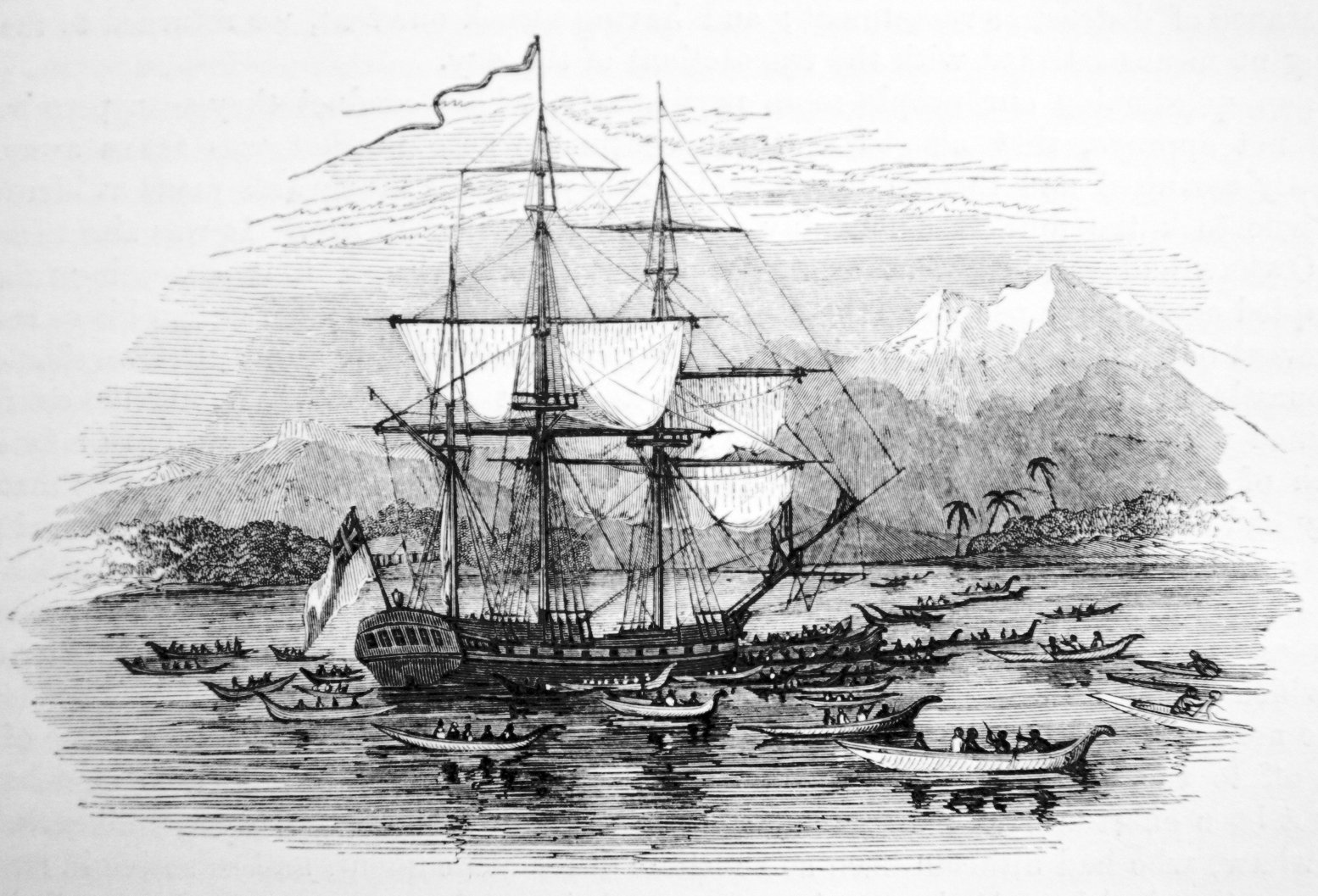
Captain Cook's Web of Discovery: Key Insights

Captain Cook's Web of Discovery

Quick take: Captain Cook's Web of Discovery remains highly relevant because it affects long-term technology adoption, education, and decision-making. This guide focuses on practical implications and what to watch next.

Captain James Cook, a man of unparalleled ambition and skill, stands as one of the most studied figures of the Age of Exploration. His voyages to New Zealand, Australia, and Hawaii formed a web of interconnected narratives—stories of discovery, cultural collision, and unintended consequences. Cook’s journey not only mapped completely unknown coastlines; they also tested the boundaries of human capability and understanding. But they were also a harbinger of irreversible change.

Explore Lexicon Labs Books

Discover current releases, posters, and learning resources at http://lexiconlabs.store.

Conversion Picks

If this AI topic is useful, continue here:

Let us untangle these threads, examining Cook’s unique relationship with Hawaii, Australia, and New Zealand, not as isolated events, but as a continuum of human exploration and its complex consequences.

The Mapping of New Zealand: Precision Meets Tension

Year: 1769–1770

Cook’s Endeavour left its mark—literally and metaphorically—on New Zealand’s history. His mission: to find Terra Australis, the fabled southern continent. Instead, what Cook found was a pair of islands shaped by the sea and ruled by the Māori people. With the precision of a mathematician, Cook charted the jagged coastline, creating maps so accurate they would guide mariners for more than a century.

Fig. The Endeavour's First Voyage 
(Source: The Australian Museum)

But this was no quiet survey. Contact with the Māori was fraught with tension. The meeting of two worldviews—one steeped in oral tradition, the other in European empiricism—sparked misunderstandings that sometimes turned violent. Cook was not a conqueror, but his presence was a harbinger of what would follow. His charts were not just maps; they were invitations for others to come.

Australia: The Collision of Opportunity and Impact

Year: 1770

Botany Bay—its name evokes lush greenery, yet its story is one of contrasts. Cook’s encounter with Australia’s eastern coast was groundbreaking. For the British Empire, it was an opportunity: a vast land, seemingly ripe for settlement. For the Aboriginal peoples, it was the beginning of disruption.

Cook’s journals brim with wonder at the continent’s unique ecosystems. He documented kangaroos, eucalyptus trees, and the sprawling Great Barrier Reef, which nearly ended his journey when the Endeavour ran aground. But what of the people? Cook wrote of the Aboriginal Australians with a mix of curiosity and detachment, noting their way of life but failing to grasp its depth.

His legacy in Australia is perhaps the most contentious. Was he a discoverer or a precursor to dispossession? The truth lies in the uneasy intersection of both narratives.

Hawaii: A Double-Edged Welcome

Year: 1778

By the time Cook’s third voyage reached the Hawaiian Islands, his reputation preceded him. The Native Hawaiians, steeped in their own rich traditions, initially greeted Cook as a divine figure. His arrival coincided with the makahiki, a festival honoring the god Lono, which many believe influenced the initial welcome. This coincidence set the stage for a cultural exchange laden with misinterpretation.

When Cook returned to Hawaii in 1779, the mood had shifted. Supplies were scarce, tensions simmered, and small disputes escalated. Cook’s decision to take a Hawaiian chief hostage—an act he had used successfully elsewhere—was a fatal miscalculation. On February 14, 1779, Cook was killed at Kealakekua Bay, ending his final voyage not in triumph but in tragedy.


Fig. Captain Cook's Memorial in Kealakekua Bay 

Hawaii remains Cook’s most paradoxical legacy: a land where he is remembered both as a navigator of unmatched skill and as a symbol of colonial disruption.

A Web of Consequences

Captain James Cook’s voyages were not isolated events; they were nodes in a larger network of discovery, science, and cultural entanglement. New Zealand gained maps but lost autonomy. Australia gained recognition but suffered displacement. Hawaii gained knowledge but endured profound cultural shifts.

Cook’s brilliance as a navigator cannot be denied. His maps, journals, and scientific observations expanded humanity’s understanding of the world. Yet his journeys also remind us that exploration is never neutral. It is always an act of connection—and disruption.

Cook’s story is a web of triumphs and tragedies. To study it is to see the world not in black and white, but in the full spectrum of human ambition, curiosity, and consequence.

Great Explorers Series

Check out our current list of exciting titles from our Great Explorers Series of biographies:

Lewis and Clark: Blazing a Trail to the West
Lewis and Clark's expedition, commissioned by President Thomas Jefferson, marked a significant exploration of the American West. From 1804 to 1806, they mapped new routes, documented species, and established relations with Native American tribes, paving the way for westward expansion.

Magellan: First Circumnavigator of the Earth
Ferdinand Magellan is renowned for leading the first successful circumnavigation of the Earth from 1519 to 1522. Despite facing numerous challenges, his expedition reshaped global geography, proving that the Earth could be circumnavigated by sea.

Shackleton: Pioneering Explorer of the Antarctic
Sir Ernest Shackleton’s Antarctic expeditions, particularly the Endurance voyage, cemented his reputation as a tenacious explorer. Trapped in ice, Shackleton's leadership and resilience saved his crew, making his journey a symbol of courage and perseverance.

Captain Cook's Web of Discovery: Key Insights image 1


Robert Falcon Scott: A Pioneer of Antarctic Exploration
Robert Falcon Scott is known for his Antarctic expeditions and his tragic attempt to reach the South Pole in 1912. Despite being beaten to the pole by Amundsen, Scott’s bravery and contributions to science continue to be celebrated.

Marco Polo: Intrepid Explorer who Bridged East and West
Marco Polo’s travels in the 13th century offered Europeans a glimpse of the wealthy lands of Asia. His detailed accounts of China and the court of Kublai Khan opened new possibilities for trade and cultural exchange between Europe and Asia.

Captain Cook: The Legendary Seafarer, Navigator, and Explorer
Captain James Cook is celebrated for his detailed mapping of the Pacific, including Australia, New Zealand, and Hawaii. His voyages expanded European knowledge of the world’s oceans and unknown territories, leaving an enduring impact on global exploration.

Related Content

Gandhi vs Churchill: Clash of the Titans
Great Scientists Series
Great Artists Series
Great Leaders Series: Just in Time for the Holidays

(To see 100 Most Recent Posts on Lexicon Labs -> Click Here)

Stay Connected

Follow us on @leolexicon on X

Join our TikTok community: @lexiconlabs

Watch on YouTube: Lexicon Labs


Newsletter

Sign up for the Lexicon Labs Newsletter to receive updates on book releases, promotions, and giveaways.


Catalog of Titles

Our list of titles is updated regularly. View the full Catalog of Titles on our website.

Stay Connected

Follow us on @leolexicon on X

Join our TikTok community: @lexiconlabs

Watch on YouTube: @LexiconLabs

Learn More About Lexicon Labs and sign up for the Lexicon Labs Newsletter to receive updates on book releases, promotions, and giveaways.

Great Explorers Series: Key Insights

Great Explorers Series

Current list of the exciting titles in our Great Explorers Series of biographies:

Explore Lexicon Labs Books

Discover current releases, posters, and learning resources at http://lexiconlabs.store.

Conversion Picks

Want more from Lexicon Labs? Continue with these reader favorites:

Lewis and Clark: Blazing a Trail to the West
Lewis and Clark's expedition, commissioned by President Thomas Jefferson, marked a significant exploration of the American West. From 1804 to 1806, they mapped new routes, documented species, and established relations with Native American tribes, paving the way for westward expansion.

Magellan: First Circumnavigator of the Earth
Ferdinand Magellan is renowned for leading the first successful circumnavigation of the Earth from 1519 to 1522. Despite facing numerous challenges, his expedition reshaped global geography, proving that the Earth could be circumnavigated by sea.

Shackleton: Pioneering Explorer of the Antarctic
Sir Ernest Shackleton’s Antarctic expeditions, particularly the Endurance voyage, cemented his reputation as a tenacious explorer. Trapped in ice, Shackleton's leadership and resilience saved his crew, making his journey a symbol of courage and perseverance.

Great Explorers Series: Key Insights image 1


Robert Falcon Scott: A Pioneer of Antarctic Exploration
Robert Falcon Scott is known for his Antarctic expeditions and his tragic attempt to reach the South Pole in 1912. Despite being beaten to the pole by Amundsen, Scott’s bravery and contributions to science continue to be celebrated.

Marco Polo: Intrepid Explorer who Bridged East and West
Marco Polo’s travels in the 13th century offered Europeans a glimpse of the wealthy lands of Asia. His detailed accounts of China and the court of Kublai Khan opened new possibilities for trade and cultural exchange between Europe and Asia.

Captain Cook: The Legendary Seafarer, Navigator, and Explorer
Captain James Cook is celebrated for his detailed mapping of the Pacific, including Australia, New Zealand, and Hawaii. His voyages expanded European knowledge of the world’s oceans and unknown territories, leaving an enduring impact on global exploration.

Related Content

Gandhi vs Churchill: Clash of the Titans
Great Scientists Series
Great Artists Series
Great Leaders Series: Just in Time for the Holidays

Stay Connected

Follow us on @leolexicon on X

Join our TikTok community: @lexiconlabs

Watch on YouTube: Lexicon Labs


Newsletter

Sign up for the Lexicon Labs Newsletter to receive updates on book releases, promotions, and giveaways.


Catalog of Titles

Our list of titles is updated regularly. View the full Catalog of Titles on our website.

Stay Connected

Follow us on @leolexicon on X

Join our TikTok community: @lexiconlabs

Watch on YouTube: @LexiconLabs

Learn More About Lexicon Labs and sign up for the Lexicon Labs Newsletter to receive updates on book releases, promotions, and giveaways.

Welcome to Lexicon Labs

Welcome to Lexicon Labs: Key Insights

Welcome to Lexicon Labs: Key Insights We are dedicated to creating and delivering high-quality content that caters to audiences of all ages...