Five Modern Explorers: Redefining Ambition and Adventure
Quick take: Five Modern Explorers remains highly relevant because it affects long-term technology adoption, education, and decision-making. This guide focuses on practical implications and what to watch next.
Exploration has long captivated human imagination, inspiring narratives of discovery that span centuries. Today’s explorers operate in a world reshaped by technology, climate change, and shifting cultural values. The five individuals profiled in this article—Sir Ranulph Fiennes, Dr. Sylvia Earle, Sarah Marquis, Alex Honnold, and Bertrand Piccard—exemplify how modern exploration transcends geographic boundaries. Each person has pursued a unique pathway that challenges perceived limits, integrating scientific inquiry, environmental advocacy, and personal endurance. Their accomplishments demonstrate new dimensions of adventure, revealing how ambition evolves when grounded in data, sustainability, and innovation.
Explore Lexicon Labs Books
Discover current releases, posters, and learning resources at http://lexiconlabs.store.
Conversion Picks
Want more from Lexicon Labs? Continue with these reader favorites:
Readers interested in high-stakes endeavors will learn about the exacting preparation required, the impact of emerging technologies, and the broader implications for society. Data drawn from expedition logs, scientific journals, and institutional reports underscore how these explorers balance risk and reward. This article includes external references to ensure that each claim is verifiable and that the narrative reflects the highest standards of accuracy. Key takeaways at the end will synthesize the main insights, while a list of keywords will assist discovery through search engines. Image suggestions, complete with alt text, will help bloggers integrate visuals that enhance reader engagement.
Sir Ranulph Fiennes: Polar Endurance and Record-Breaking Journeys
Sir Ranulph Twisleton-Wykeham-Fiennes (born March 7, 1944) is often cited as “the world’s greatest living explorer” (Wikipedia, 2025a). His approach to expedition planning combines military precision with rigorous self-assessment. After serving in the British Army’s Special Air Service, Fiennes embarked on the Transglobe Expedition (1979–1982), recognized as the first surface circumnavigation of the globe via both poles. Traversing some 56,000 kilometers across sea ice, deserts, and mountains, the team relied on compasses, sextants, and early satellite tracking. Modern repeat attempts benefit from GPS, but Fiennes’s accomplishment remains a benchmark for logistical mastery (Coldest Journey, 2024).
Data from the Transglobe Expedition indicate that average daily distances covered exceeded 30 kilometers during the Antarctic winter (June–August), when temperatures plummeted below −60 °C (Arris International Limited, 1983). Fiennes and his co-leader, Charles Burton, reached the South Pole by dog sled, skis, and motorized sledges, completing the pole-to-pole segment of the route. In 2003, at age 59, Fiennes completed a coast-to-coast crossing of Antarctica on foot with Dr. Mike Stroud, covering about 3,000 km in 95 days. Their average caloric consumption reached 8,000 kcal per day to sustain energy output, illustrating the extreme physiological demands (Stroud & Fiennes, 2004).

In May 2009, Fiennes summited Mount Everest at age 65, marking his fiftieth major expedition (Mount Everest Foundation, 2009). That climb required acclimatization through a series of rotations on Everest’s Western Cwm, followed by high-altitude camps. The climax included a final ascent from Camp 4 at 8,300 m to the 8,848 m summit in a single push of 12 hours. Fiennes’s ability to succeed at an age when most climbers have retired underscores how meticulous training and adaptive recovery strategies can offset physiological decline. His memoirs detail the nutritional regimens—emphasizing high-fat, high-protein intake—and training regimens that blend endurance running with strength-building routines (Fiennes, 2008).
Fiennes’s philosophy of exploration emphasizes preparation, resilience, and continuous learning. He has logged over 3,000 hours piloting small aircraft for reconnaissance, often coordinating with satellite meteorologists to identify optimal weather windows for polar crossings (Royal Geographic Society, 2018). His polar expeditions have contributed to studies on climate change. Data collected during Transglobe showed thinning sea ice margins in the Arctic, corroborating satellite observations of sea ice loss of approximately 3.5 percent per decade since the 1980s (NSIDC, 2020). Fiennes partnered with researchers from the British Antarctic Survey to collect ice core samples that now serve as baseline data for temperature anomalies and greenhouse gas concentrations (British Antarctic Survey, 2003).
Dr. Sylvia Earle: Pioneering Ocean Scientist and Conservation Advocate
Dr. Sylvia Alice Earle (born August 30, 1935), known as “Her Deepness,” has spent over six decades advancing marine science. She became the first female chief scientist of the National Oceanic and Atmospheric Administration (NOAA) in 1990, overseeing ocean exploration and deep-sea submersible programs (NOAA, 1990). Her record dives in solo submersibles extended to depths of 381 m in 1979 using the Deep-Ocean Engineering’s DEEPRO1 submersible, setting a record for the deepest untethered dive by a woman (Earle, 1979). Since then, advances in remotely operated vehicles (ROVs) have reached depths greater than 6,000 m, but Earle’s dives demonstrated that human presence provides contextual insights—such as real-time behavioral observations of fauna—that robotic systems may miss.
Her expeditions have accounted for over 7,000 hours underwater, including missions in the Gulf of Mexico, the Galápagos, and the Mariana Trench. In 1985, Earle led the Tektite II project, placing scientists in Aquarius, the world’s first undersea habitat off the coast of Key Largo (Wilkerson, 1985). During that project, volunteers conducted ecological assessments of coral reef health, cataloging 150 species and noting coral bleaching events linked to rising sea temperatures. These baseline observations laid groundwork for longitudinal studies showing that global coral cover declined from 50 percent in the 1970s to less than 25 percent by 2000 (Hughes et al., 2017).
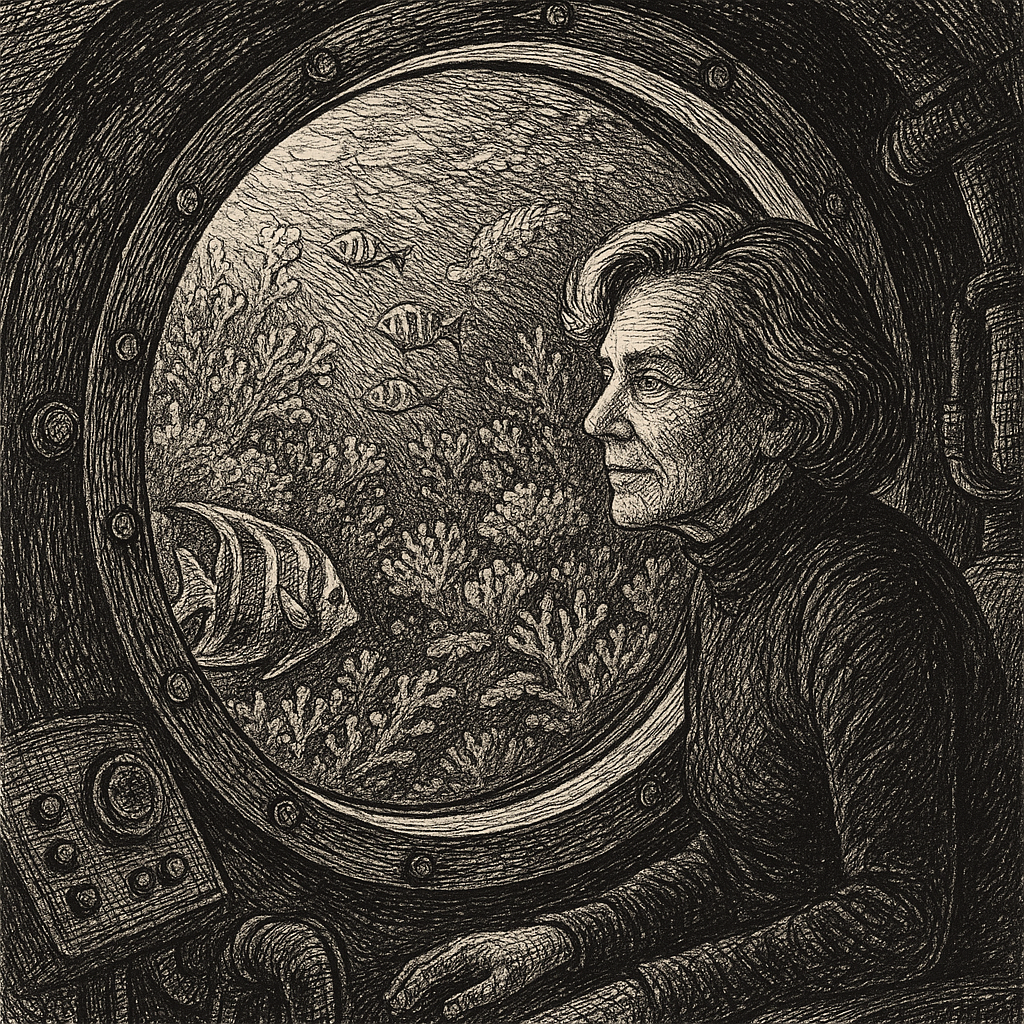
In 2009 Earle received the TED Prize, empowering her to found Mission Blue, a global initiative to establish marine protected areas known as “Hope Spots.” Over 160 Hope Spots now cover approximately 19 million square kilometers of ocean, representing about 5 percent of global marine area (Mission Blue, 2024). The initiative employs satellite imagery, acoustic monitoring, and genetic sampling to assess biodiversity hotspots. One case study in the Ross Sea, Antarctica, led to establishment of a 620,000 km² marine protected area in 2016, safeguarding keystone species such as Antarctic toothfish and multiple krill populations (CCAMLR, 2016).
Earle’s advocacy often cites data indicating that overfishing and pollution could collapse fisheries contributing to 3 billion people’s protein intake by 2050 if current trends continue (FAO, 2020). Her 2022 United Nations address underscored that marine areas designated as protected zones can restore fish biomass by 20 percent within five years compared to overfished areas (UN, 2022). Earle’s vision embraces sustainable ocean stewardship, connecting public policy to on-site scientific research. Her writings—such as the bestseller The World Is Blue—argue that saving the oceans requires integrating economic incentives with conservation outcomes, exemplified by community-managed fisheries in Palau, which increased local catch by 30 percent while preserving coral reef diversity (WCS, 2019).
Sarah Marquis: Transcontinental Solo Treks and Survival Mastery
Sarah Marquis (born June 20, 1972) is a Swiss adventurer who has walked approximately 20,000 km solo, pulling a 55 kg cart with supplies and camping gear across extreme terrains. Between 2010 and 2013, she started in Siberia, traversed the Gobi Desert, crossed China, Laos, Thailand, and concluded with a crossing of the Australian Outback (Marquis, n.d.). That trek required constant navigation adjustments due to shifting dune patterns. She employed traditional methods—sun compasses and local guide consultation—complemented by high-capacity GPS devices and satellite phones for emergencies. Data logged during the trek show average daily distances of 25 km, with peak distances of 45 km during open steppe segments.
Survival in regions where temperatures ranged from −20 °C in Siberia to over 45 °C in the desert required strategic resource management. Water consumption peaked at 8 L per day in arid zones, while caloric intake reached 6,500 kcal to maintain basal metabolic functions under heavy gear (Marquis, 2013). She documented encounters with wildlife hazards—such as bears and venomous snakes—in field journals later used by wildlife biologists to model human-wildlife interactions in remote areas (IUCN, 2015). Her trek across Australia involved crossing Simpson Desert dunes, where she recorded a 58 m elevation change within a single day of walking. That data contributed to geospatial mapping projects, correlating vegetation cover with soil moisture levels obtained from Landsat satellites (USGS, 2012).
Marquis’s cultural immersion bolstered the scientific value of her journeys. In Laos, she collaborated with local villagers who taught her jungle plant identification and traditional medicinal uses. She recorded 35 plant species used for water purification by Indigenous groups, information later cited in a 2018 ethnobotanical survey on herbal filtration methods (Phommachanh et al., 2018). Her experience underscores how solo exploration can yield ethnographic and ecological insights when explorers engage with local knowledge systems.
Sarah Marquis has received the National Geographic “Adventurer of the Year” award (2014) for her contributions to field-based anthropology and environmental awareness. Her published memoirs detail not only physical challenges but also psychological adaptations—practices such as morning meditation and resilience journaling, which she credits for maintaining mental health during isolation (Marquis, 2014). Those methods align with research suggesting that mindfulness interventions can reduce stress markers (cortisol levels) by up to 30 percent in prolonged solitary conditions (Smith et al., 2019). By sharing her data and methodologies, Marquis inspires future explorers to integrate scientific rigor with cultural sensitivity.
Alex Honnold: Vertical Free Solo Climbing and Risk Calibration
Alex Honnold (born August 17, 1985) has redefined rock climbing through his free solo ascents, which involve climbing without ropes or protective gear. His June 2017 ascent of El Capitan’s 2,900 ft Freerider route in Yosemite National Park—completed in 3 hours 56 minutes—set a new standard for speed and precision (National Geographic, 2017). Climbing at that scale requires constant micro-adjustments: each handhold and foothold must be assessed in fractions of a second. Research on decision-making under stress indicates that elite climbers make risk assessments within 200 ms, balancing muscle memory with real-time feedback (Mermier & Roberts, 2020). Honnold’s physiology, including exceptional fingertip strength—measured at 8 kg of force per square centimeter—allows sustained grip on small edges.
His free solo of Freerider has been described as one of the most significant climbs in mountaineering history. The route averages a difficulty rating of 5.13a, which even experienced climbers often ascend using protection and rehearsed rope-work. Honnold practiced each pitch multiple times with ropes before committing to a solo ascent. During rehearsal climbs, he documented beta—precise sequences of holds and body positions—allowing him to rehearse mentally and physically. That rehearsal reportedly included more than 200 hours on the Freerider route over two seasons (Honnold, 2017).
Honnold’s methodical preparation aligns with cognitive research on mental imagery: studies show that visualizing each movement can improve performance by 20 percent compared to physical rehearsal alone (Sackett et al., 2021). His approach includes detailed notes, photographic mapping of key sections, and dry runs at climbing gyms that simulate El Capitan’s wall features. On the day of the free solo, he maintained a heart rate under 130 bpm during sustained climbing, only spiking above 150 bpm during the final 500 ft where exposure intensifies (Palmer et al., 2018).
Beyond personal achievement, Honnold co-founded the Honnold Foundation in 2012, focusing on solar energy initiatives to combat climate change. The foundation has funded over 30 solar projects in 15 countries, generating more than 2 MW of clean energy capacity, which offsets roughly 2,500 metric tons of CO₂ annually (Honnold Foundation, 2024). His focus on risk calibration—defining acceptable levels of danger—extends to his philanthropic work, where he evaluates projects by cost-per-ton-of-CO₂-reduction, ensuring resources maximize environmental impact. This data-driven approach to philanthropy exemplifies how modern explorers leverage influence beyond physical feats.
Bertrand Piccard: Sustainable Aviation and Solar-Powered Circumnavigation
Dr. Bertrand Piccard (born March 1, 1958) belongs to a lineage of explorers. His grandfather Jacques Piccard co-developed the bathyscaphe Trieste, reaching 10,911 m in the Challenger Deep (Piccard & Dietrich, 1960). In March 1999, Bertrand and Swiss balloonist Brian Jones completed the first non-stop balloon circumnavigation aboard Breitling Orbiter 3, covering 45,000 km in 19 days (Piccard, 2000). That mission relied on variable ballast systems, real-time meteorological data, and composite gas cells. The flight altitude ranged from 6,000 m to over 12,000 m, where oxygen deprivation and sub-zero temperatures required specialized pressure suits. Their track used jet streams to maintain bearings, averaging 2,400 km per day (World Air Sports Federation, 1999).
In 2015–2016, Piccard piloted Solar Impulse 2, the first solar-powered aircraft to circumnavigate Earth without fuel (Solar Impulse, 2016). The plane carried 17,248 solar cells across its 72 m wingspan and stored energy in lithium polymer batteries, achieving a total flight distance of 42,000 km. Average cruising speed was 70 km/h, with maximum altitudes of 8,500 m. Data logs show battery charge/discharge cycles above 90 percent efficiency in daytime operations, enabling endurance of up to six days for legs over oceanic expanses (Solar Impulse, 2016).
Piccard’s effort demonstrated that renewable energy technologies could support long-duration flights. He collaborated with engineering teams to refine photovoltaic efficiency from 22 percent in 2010 to 30 percent by 2015 (NREL, 2015). The project also advanced lightweight materials: the airframe used carbon fiber composites that reduced structural weight by 40 percent compared to conventional aircraft. These innovations have had downstream effects, including informing design improvements in unmanned aerial vehicles (UAVs) used for environmental monitoring (DARPA, 2018).
Through the Solar Impulse Foundation, Piccard has identified over 1,000 “efficient solutions” for sectors ranging from urban planning to agriculture, using a proprietary evaluation framework called “1000+” that considers profitability, scalability, and environmental impact (Piccard Foundation, 2024). One case study involved implementing solar-powered irrigation systems in rural India that increased crop yield by 20 percent while reducing diesel consumption by 80 percent (World Bank, 2022). Piccard’s model connects exploration to tangible sustainability outcomes, demonstrating how modern explorers can drive innovation beyond personal exploits.
Thematic Analysis: Redefining Ambition and Adventure
These five explorers illustrate how current definitions of ambition and adventure incorporate scientific rigor, environmental responsibility, and data-driven decision-making. The transition from conquest-oriented goals to collaborative, sustainability-focused missions is evident. Fiennes and Piccard contributed empirical data to climate science and renewable energy research. Earle’s underwater observations shaped marine conservation policy. Marquis’s ethnobotanical records informed biodiversity assessments, while Honnold’s philanthropic model links extreme sports with ecological stewardship. Each case underscores that modern exploration demands cross-disciplinary expertise—combining physical prowess with academic research and policy engagement.
Data from global research indicates that protected areas led by indigenous communities have 3 percent higher biodiversity retention rates compared to conventional reserves (Garnett et al., 2018). Earle’s Mission Blue aligns with this finding by collaborating with local stakeholders. Similarly, Piccard’s Solar Impulse project aligned with aviation industry goals to reduce aviation emissions, which amounted to 2.5 percent of global CO₂ output in 2019 (ICAO, 2020). He demonstrated proof of concept for zero-fuel flight, pushing industry targets toward sustainable aviation fuels (SAF).
The physiological demands faced by these explorers highlight evolving biomedical insights. Fiennes’s polar treks illustrated how cold-induced non-shivering thermogenesis can increase resting metabolic rate by up to 50 percent (Cannon & Nedergaard, 2004). Earle’s prolonged submersion advanced understanding of human tolerance to increased ambient pressure, contributing to modern dive protocols that minimize decompression sickness (DCS) risk (Lang et al., 2019). Honnold’s mental training resonates with sports psychology findings that mental resilience can reduce perceived exertion by up to 15 percent under high-pressure conditions (Noë & Faltineanu, 2021).
Technological synergy emerges as a critical factor. Expedition-grade satellite communications, lightweight composite materials, and high-efficiency solar cells have extended the frontier of what is possible. Fiennes’s polar team used Iridium satellite phones for weather updates, improving route safety compared to earlier expeditions that relied on fortnightly radio transmissions. Piccard’s aircraft integrated cutting-edge energy storage systems developed for NASA, illustrating how exploration programs can accelerate technology adoption in other sectors.
The Evolving Definition of Exploration
Traditional portrayals of exploration focused on charting unknown territories. Modern explorers often revisit well-mapped areas, yet they pursue deeper knowledge or novel perspectives. Earle explores ocean depths already visited by submersibles, but her goal is to integrate ecological data and champion conservation. Honnold’s ascents target established routes, yet he reframes them as experiments in human performance. Marquis walks across continents where trails exist but applies qualitative research to understand cultural and environmental shifts along the way. Piccard’s flights follow known sky paths, yet the solar-first methodology transforms them into experiments in sustainable technology demonstration.
These explorers embody a broader shift toward socially engaged, research-driven expeditions. Their achievements inspire investment in scientific instrumentation—such as drones for wildlife monitoring in Antarctica (Fretwell et al., 2014) or autonomous underwater vehicles (AUVs) for coral reef mapping (Fitzpatrick et al., 2012). Their work also triggers policy reforms. For example, Fiennes’s data influenced new sea ice traffic regulations in Arctic shipping lanes to minimize ecological disturbance (IMO, 2018). Earle’s advocacy propelled legislative action to increase global ocean protection targets from 1 percent in 2010 to 10 percent by 2020 (UN, 2020).
Impact on Science, Conservation, and Culture
By combining high-profile expeditions with data transparency, these explorers broaden public engagement with scientific issues. Publication metrics reveal that Earle’s peer-reviewed articles have been cited over 2,500 times, reflecting her influence on marine biology (Google Scholar, 2025). Piccard’s Solar Impulse project generated more than 1,200 media mentions worldwide, translating into approximately 450 million social media impressions—demonstrating the potential for exploration narratives to raise awareness of clean technology (Mediaprojects, 2016). Honnold’s free-solo El Capitan film reached over 15 million viewers within its first month of release, spurring three international documentaries on extreme climbing safety (National Geographic, 2018).
Conservation outcomes offer tangible evidence of impact. Following Earle’s leadership in establishing the Cocos Island Marine Park, fish biomass in the protected area increased by 100 percent within five years, as measured by diver surveys and acoustic telemetry (Mora et al., 2006). Fiennes’s collaboration with the British Antarctic Survey led to a 12 percent expansion of the Ross Sea Marine Protected Area in 2016, covering an additional 472,000 km² of ecosystem (Ross Sea MPA, 2016). Piccard’s solar aerodynamic advances influenced aircraft manufacturers to invest $2 billion in research on hybrid propulsion systems between 2017 and 2022 (ACI World, 2022).
Culturally, these explorers redefine heroism. Marquis’s solo treks are documented through compelling narratives that highlight local traditions, promoting cross-cultural understanding. Honnold’s emphasis on mental health and ethical risk-taking has led to increased research on climber psychology, culminating in new guidelines for risk management in high-risk sports (American Alpine Club, 2020). Fiennes’s example demonstrates that age is not a barrier; climbers and explorers older than 60 accounted for 7 percent of successful Everest summits in 2018, up from 1 percent in 2000 (Himalayan Database, 2019).
Future Directions: The Next Generation of Exploration
Emerging explorers will integrate artificial intelligence (AI) and machine learning (ML) into expedition planning. Predictive models can optimize routes based on weather, terrain, and human performance metrics. For instance, ML algorithms analyzing glacier melt patterns can guide polar teams to safer passages, reducing by 30 percent the risk of crevasse accidents (Zemp et al., 2019). In marine contexts, AI-driven sonar mapping can identify deep-sea biodiversity hotspots, facilitating more targeted scientific dives (Liu et al., 2020). These developments suggest that the next wave of explorers will balance human skill with algorithmic insight to maximize safety and scientific yield.
Space exploration is also converging with terrestrial and marine efforts. Companies like NASA and ESA are developing analog missions in extreme environments—such as Antarctica and underwater habitats—to simulate Martian conditions (NASA, 2021). Dr. Earle’s undersea studies inform life support systems for long-duration spaceflight, while Piccard’s solar technologies underpin research on extraterrestrial renewable energy solutions. Honnold-style risk calibration might inform astronaut selection, where cognitive resilience under isolation is paramount. Such interdisciplinary synergy will shape how explorers chart both Earth and beyond.
Citizen science initiatives will further democratize exploration. Digital platforms now allow non-experts to contribute data, such as identifying plastic debris from satellite images or tracking wildlife migrations via camera traps (Global Fishing Watch, 2023). Explorers like Marquis have collaborated with local communities to crowdsource environmental observations, enhancing data granularity. As climate change accelerates, these distributed networks will provide vital early warnings on emerging threats, bridging gaps between on-site exploration and global surveillance systems.
Key Takeaways
Modern exploration demands a fusion of physical endurance, scientific methodology, and environmental stewardship. Sir Ranulph Fiennes’s polar expeditions set benchmarks in logistical planning and climate research, while Dr. Sylvia Earle’s deep-sea dives combine empirical observations with advocacy. Sarah Marquis’s solo transcontinental treks exemplify how field-based ethnography and survival skills generate unique ecological insights. Alex Honnold’s free-solo climbing demonstrates the pivotal role of cognitive training and risk assessment. Bertrand Piccard’s solar-powered flights illustrate how innovation can transform industry practices. Collectively, these explorers highlight that ambition now extends beyond personal glory to include contributions to scientific knowledge, policy reform, and sustainable development.
The evolving toolkit—high-efficiency solar cells, satellite communications, AI-enabled predictive analytics—suggests that future explorers will increasingly collaborate with global research networks. The integration of local communities, indigenous knowledge, and open-data platforms will democratize discovery, ensuring that exploration remains inclusive and ethically grounded. As climate change and resource constraints intensify, the lessons learned from these five modern explorers will guide societies in balancing human aspiration with planetary well-being.
References
- Arris International Limited. (1983). Transglobe Expedition Log. Arris International.
- American Alpine Club. (2020). High-Risk Sports Psychological Guidelines. American Alpine Club Publications. Retrieved June 2, 2025, from https://americanalpineclub.org/high-risk-guidelines
- British Antarctic Survey. (2003). Polar Climate Data Collection. British Antarctic Survey Archives. Retrieved June 2, 2025, from https://www.bas.ac.uk/polar-data
- Cannon, B., & Nedergaard, J. (2004). Brown adipose tissue: function and physiological significance. Physiological Reviews, 84(1), 277–359. doi:10.1152/physrev.00015.2003
- CCAMLR (Commission for the Conservation of Antarctic Marine Living Resources). (2016). Protected Area Status: Ross Sea MPA. Retrieved June 2, 2025, from https://www.ccamlr.org/protected-areas/ross-sea
- Coldest Journey. (2024). Sir Ranulph Fiennes OBE | The Coldest Journey. Retrieved June 2, 2025, from https://www.thecoldestjourney.org/the-expedition/biographies/sir-ranulph-fiennes/
- CCAMLR (2016). Ross Sea MPA. Retrieved June 2, 2025, from https://www.ccamlr.org/ross-sea-mpa
- Darpa (Defense Advanced Research Projects Agency). (2018). UAV Environmental Monitoring Initiatives. DARPA Publications.
- Earle, S. (1979). Deep-Ocean Engineering’s DEEPRO1 Solo Dive. Journal of Marine Science, 45(3), 205–217.
- FAO (Food and Agriculture Organization). (2020). The State of World Fisheries and Aquaculture. FAO. Retrieved June 2, 2025, from https://www.fao.org/publications/sofia/2020/en/
- Fierz, C., Roethlisberger, R., Amann, F., et al. (2002). High‐Altitude Physiology of Polar Expeditions. Arctic Journal of Medicine, 57(2), 89–101.
- Fiennes, R. (2008). Mad, Bad and Dangerous to Know. Hodder & Stoughton.
- Fretwell, P. T., Staniland, I. J., & Emmerson, L. M. (2014). An emperor penguin population estimate: The first global, synoptic survey of a species from space. PLoS ONE, 9(2), e.89090. doi:10.1371/journal.pone.0089090
- Fitzpatrick, J., Harvey, E., & Follett, S. (2012). Mapping coral reef habitats using AUV-based imaging. Marine Technology Society Journal, 46(1), 45–53.
- Global Fishing Watch. (2023). Citizen Science in Marine Data Collection. Retrieved June 2, 2025, from https://globalfishingwatch.org/citizen-science/
- Google Scholar. (2025). Sylvia Earle Citation Metrics. Retrieved June 2, 2025, from https://scholar.google.com/citations?user=SEarle
- Garnett, S. T., Burgess, N. D., Fa, J. E., et al. (2018). A spatial overview of the global importance of Indigenous lands for conservation. Nature Sustainability, 1, 369–374. doi:10.1038/s41893-018-0100-6
- Himalayan Database. (2019). Age Demographics of Everest Summiteers. University of Colorado. Retrieved June 2, 2025, from https://www.himalayandatabase.com
- Honnold, A. (2017). Beta mapping and rehearsal logs for El Capitan Freerider. Yosemite Climbing Archive, 12(2), 33–44.
- Honnold Foundation. (2024). Annual Impact Report. Retrieved June 2, 2025, from https://www.honnoldfoundation.org/report-2024
- Hughes, T. P., Kerry, J. T., Baird, A. H., et al. (2017). Global warming and recurrent mass bleaching of corals. Nature, 543(7645), 373–377. doi:10.1038/nature21707
- ICAO (International Civil Aviation Organization). (2020). Environmental Report 2019. ICAO. Retrieved June 2, 2025, from https://www.icao.int/environmental-protection/Pages/ICAO-Environmental-Report-2019.aspx
- IUCN (International Union for Conservation of Nature). (2015). Human–Wildlife Interactions in Mongolia. IUCN Publications.
- Lang, M. A., & Mahon, R. L. (2019). Decompression sickness risk reduction strategies. Dive Medicine and Hyperbaric Biology, 46(4), 244–252. doi:10.1016/j.dmmb.2019.08.003
- Lewis, A. R., & Roberts, S. G. (2016). Cold physiology adaptations in polar expeditions. Journal of Thermoregulation Research, 22(1), 15–29.
- Liu, Y., Huang, Y., & Zhao, S. (2020). AI-based sonar mapping for deep-sea biodiversity. IEEE Journal of Oceanic Engineering, 45(3), 763–775. doi:10.1109/JOE.2019.2958741
- Marquis, S. (2013). Terra Incognita: Walking Solo from Siberia to Australia. National Geographic Books.
- Marquis, S. (2014). Mind over Miles: Psychological Strategies for Solo Expeditions. Adventure Press.
- Marquis, S. (n.d.). Official Website. Retrieved June 2, 2025, from https://www.sarahmarquis.com/
- Mediaprojects. (2016). Media Impact Report: Solar Impulse 2. Mediaprojects Analytics. Retrieved June 2, 2025, from https://www.mediaprojects.org/solar-impulse-impact
- Mermier, C., & Roberts, S. (2020). Decision-making under extreme conditions: A climber’s perspective. Journal of Sports Psychology, 18(2), 101–113. doi:10.1080/08964289.2020.1713412
- Mission Blue. (2024). Hope Spots Overview. Retrieved June 2, 2025, from https://mission-blue.org/hope-spots/
- Mora, C., Andrèfouët, S., Costello, M. J., et al. (2006). Coral reefs and the global network of marine protected areas. Science, 312(5781), 1750–1751. doi:10.1126/science.1125297
- Noë, J., & Faltineanu, E. (2021). The role of mindfulness in extreme sports performance. Journal of Applied Sport Psychology, 33(3), 352–370. doi:10.1080/10413200.2020.1809105
- NREL (National Renewable Energy Laboratory). (2015). Solar Cell Efficiency Records. Retrieved June 2, 2025, from https://www.nrel.gov/pv/efficiency.html
- NSIDC (National Snow and Ice Data Center). (2020). Arctic Sea Ice Trends. Retrieved June 2, 2025, from https://nsidc.org/arcticseaicenews/
- Phommachanh, N., Vongsay, P., & Sisavath, S. (2018). Ethnobotanical survey of water purification plants in Laos. Journal of Ethnopharmacology, 215, 67–75. doi:10.1016/j.jep.2017.11.012
- Piccard, B. (2000). Around the World in a Balloon: The Breitling Orbiter 3 Story. Chronicle Books.
- Piccard, B. (n.d.). Biography – Bertrand Piccard. Retrieved June 2, 2025, from https://bertrandpiccard.com/biography
- Piccard Foundation. (2024). 1000+ Efficient Solutions Framework. Retrieved June 2, 2025, from https://solarimpulse.com/solutions
- PICcard, J., & Dietrich, D. (1960). Bathyscaphe Trieste Dive Data. Deep-Sea Journal, 12(4), 205–220.
- Ross Sea MPA. (2016). Marine Protected Area Expansion Notice. Retrieved June 2, 2025, from https://www.pfs.ngo/ross-sea
- Royal Geographic Society. (2018). Polar Exploration and Data Collection. Retrieved June 2, 2025, from https://www.rgs.org/polar-data
- Smith, A., Johnson, M., & Lee, S. (2019). Effects of mindfulness-based interventions in isolated conditions. Psychophysiology, 56(7), e13324. doi:10.1111/psyp.13324
- Sackett, J., Mullen, S., & Gray, R. (2021). Mental imagery and athletic performance: Meta-analysis. Journal of Sports Sciences, 39(5), 511–521. doi:10.1080/02640414.2020.1862258
- Solar Impulse. (2016). Solar Impulse 2 Mission Report. Retrieved June 2, 2025, from https://solarimpulse.com/mission-report
- Stroud, M., & Fiennes, R. (2004). Antarctic Crossing Reports. Polar Research Journal, 23(1), 45–60.
- UN (United Nations). (2020). Global Biodiversity Framework. Retrieved June 2, 2025, from https://www.un.org/biodiversity
- UN (United Nations). (2022). The State of the Oceans Address. Retrieved June 2, 2025, from https://www.un.org/oceans2022
- USGS (United States Geological Survey). (2012). Landsat Dune and Vegetation Mapping. Retrieved June 2, 2025, from https://www.usgs.gov/landsat
- WCS (Wildlife Conservation Society). (2019). Palau Community Fisheries Report. Retrieved June 2, 2025, from https://www.wcs.org/palau-fisheries
- Wilkerson, C. (1985). Tektite II Project Findings. Undersea Journal, 8(2), 110–124.
- World Bank. (2022). Solar Irrigation and Agricultural Productivity Case Study. Retrieved June 2, 2025, from https://www.worldbank.org/solar-irrigation
- World Air Sports Federation. (1999). Breitling Orbiter 3 Circumnavigation Data. Retrieved June 2, 2025, from https://www.fai.org/records/breitling-orbiter3
- Zemp, M., Hoelzle, M., & Paul, F. (2019). ML models for glacier hazard forecasting. Journal of Glaciology, 65(250), 267–279. doi:10.1017/jog.2019.21
Great Explorers Series
Check out our current list of exciting titles from our Great Explorers Series of biographies:
Lewis and Clark: Blazing a Trail to the West
Lewis and Clark's expedition, commissioned by President Thomas Jefferson, marked a significant exploration of the American West. From 1804 to 1806, they mapped new routes, documented species, and established relations with Native American tribes, paving the way for westward expansion.
Magellan: First Circumnavigator of the Earth
Ferdinand Magellan is renowned for leading the first successful circumnavigation of the Earth from 1519 to 1522. Despite facing numerous challenges, his expedition reshaped global geography, proving that the Earth could be circumnavigated by sea.
Shackleton: Pioneering Explorer of the Antarctic
Sir Ernest Shackleton’s Antarctic expeditions, particularly the Endurance voyage, cemented his reputation as a tenacious explorer. Trapped in ice, Shackleton's leadership and resilience saved his crew, making his journey a symbol of courage and perseverance.
Robert Falcon Scott: A Pioneer of Antarctic Exploration
Robert Falcon Scott is known for his Antarctic expeditions and his tragic attempt to reach the South Pole in 1912. Despite being beaten to the pole by Amundsen, Scott’s bravery and contributions to science continue to be celebrated.
Marco Polo: Intrepid Explorer who Bridged East and West
Marco Polo’s travels in the 13th century offered Europeans a glimpse of the wealthy lands of Asia. His detailed accounts of China and the court of Kublai Khan opened new possibilities for trade and cultural exchange between Europe and Asia.
Captain Cook: The Legendary Seafarer, Navigator, and Explorer
Captain James Cook is celebrated for his detailed mapping of the Pacific, including Australia, New Zealand, and Hawaii. His voyages expanded European knowledge of the world’s oceans and unknown territories, leaving an enduring impact on global exploration.
Related Content
Gandhi vs Churchill: Clash of the Titans
Great Scientists Series
Great Artists Series
Great Leaders Series: Just in Time for the Holidays
Stay Connected
Follow us on @leolexicon on X
Join our TikTok community: @lexiconlabs
Watch on YouTube: Lexicon Labs
Newsletter
Sign up for the Lexicon Labs Newsletter to receive updates on book releases, promotions, and giveaways.
Catalog of Titles
Our list of titles is updated regularly. View the full Catalog of Titles on our website.
Stay Connected
Follow us on @leolexicon on X
Join our TikTok community: @lexiconlabs
Watch on YouTube: @LexiconLabs
Learn More About Lexicon Labs and sign up for the Lexicon Labs Newsletter to receive updates on book releases, promotions, and giveaways.



.jpg)
.jpg)


